


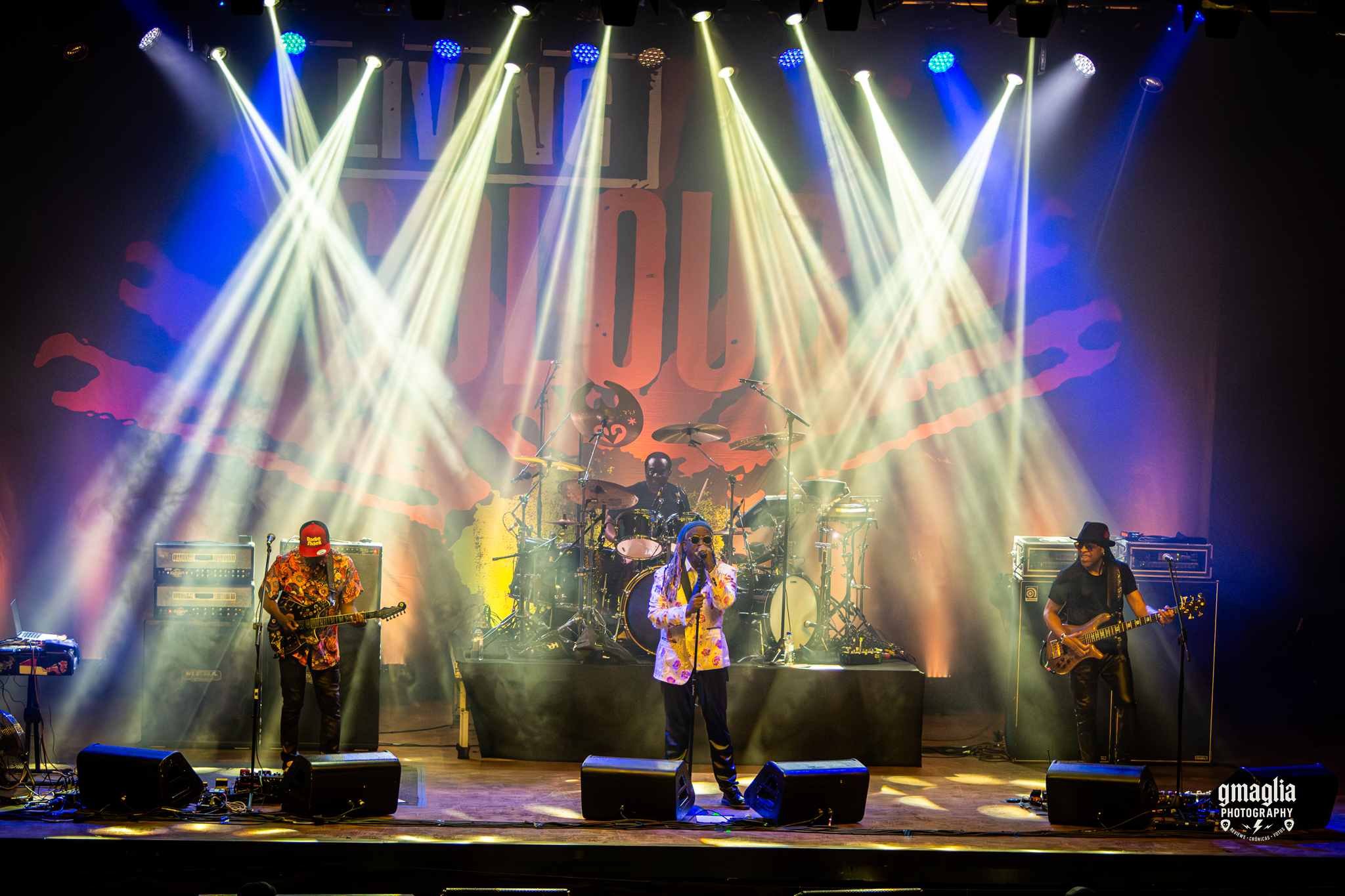

O Live Curitiba não estava cheio. E isso não importava.
Porque havia algo mais presente do que números. Havia densidade. Havia atenção. Havia o tipo de silêncio que só existe quando todos entendem, mesmo sem dizer, que estão prestes a testemunhar algo real.
Não havia excesso. Não havia distração. Apenas o palco, a luz perfeita e um sistema de som que não escondia nada. Cada frequência encontrava seu lugar. Cada respiração era audível.
Era o ambiente ideal para duas bandas que não dependem de artifícios.
Dependem de verdade.
Madzilla: o peso que atravessou o deserto
Quando o Madzilla entrou no palco, não houve ruptura brusca. Houve construção.

“The Dawn of Glory” nasceu no piano, frágil e solitária, ocupando o espaço com uma calma quase desconcertante. Por alguns segundos, o Live Curitiba deixou de ser uma casa de shows. Tornou-se um território suspenso.
Então o impacto veio.
“Ashes of Lights” trouxe o corpo da banda para dentro da música. O som estava impecável. Limpo, mas não clínico. Poderoso, mas sem exagero. Cada instrumento respirava.
David caminhava pelo palco com naturalidade. Não havia distância entre ele e o público. Quando falou em português novamente, não soou como um gesto ensaiado. Soou como continuidade.

Las Vegas não estava distante. Estava ali.
“Vengeance” e “Warfare Within” trouxeram o peso necessário para consolidar o terreno. O Madzilla não tocava como quem abre uma noite. Tocava como quem compreende o próprio espaço.
Mas foi em “Angel Genocide” que o presente se materializou.
Recém-lançada dias antes, a música carregava a energia de algo que ainda está nascendo. Não havia familiaridade ainda, mas havia resposta. O público observava, absorvia, reconhecia.
Era o som de uma banda atravessando um ponto de transformação.
“Asphyxiating Cries” aprofundou a atmosfera, antes de “A Deadly Threat” encerrar o set sem excessos. Sem necessidade de afirmação.
O Madzilla não pediu atenção.
Recebeu.


Living Colour: o groove como força vital
A introdução de “The Imperial March” ecoou pelo Live Curitiba como um prenúncio. Não de grandiosidade, mas de inevitabilidade.
Quando Vernon Reid entrou, a guitarra já falava antes de qualquer palavra existir. Corey Glover assumiu o centro com a presença de quem não precisa provar nada. Doug Wimbish e Will Calhoun sustentavam tudo com precisão absoluta.

“Leave It Alone” abriu o fluxo. O som era perfeito. Não havia falhas. Não havia distorções desnecessárias. Apenas uma banda operando em estado pleno.
“Middle Man” trouxe o primeiro deslocamento real da noite. O groove tomava forma física. O Living Colour não toca apenas com técnica. Toca com intenção.

“Memories Can’t Wait” mergulhou o ambiente em uma atmosfera mais densa, quase urbana. Não era uma pausa. Era expansão.
“Ignorance is Bliss” e “Go Away” mantiveram a estrutura viva, enquanto “Funny Vibe” lembrava a todos que o Living Colour nunca pertenceu a um único gênero.
Doug Wimbish conduzia tudo com uma naturalidade quase desconcertante. Seu baixo não apenas sustentava — ele guiava.
Então veio o deslocamento completo.
“White Lines”, “Apache” e “The Message” transformaram o Live Curitiba em um ponto de convergência entre décadas, gêneros e histórias. Não como nostalgia. Como continuidade.
Will Calhoun assumiu o centro com seu solo, conduzindo “Baianá” com respeito e precisão. Era o reconhecimento de que aquela troca é mútua. Sempre foi.
“Glamour Boys”. “Love Rears Its Ugly Head”. “Type”.
Cada música existia com peso próprio.
Quando “Cult of Personality” começou, não houve explosão. Houve confirmação.
Não era sobre memória. Era sobre permanência.
Mas a noite ainda guardava seu último movimento.
“Should I Stay or Should I Go”, do The Clash, surgiu como encerramento inesperado e perfeito. Não como nostalgia, mas como um gesto de conexão direta com a raiz punk que sempre atravessou o DNA do Living Colour. A casa respondeu instantaneamente, transformando o refrão em coro coletivo.
Sem discurso final. Sem despedidas longas.
Quando as luzes se acenderam, o Live Curitiba voltou a ser um espaço físico.
Mas algo havia mudado.
O Madzilla atravessou continentes e encontrou um novo território.
O Living Colour provou, mais uma vez, que não existe passado quando a música continua viva.
Algumas noites são assistidas.
Outras são absorvidas.
Curitiba absorveu tudo.


English
CURITIBA, MARCH 1st, 2026 — THE NIGHT SOUND BECAME MATTER
Live Curitiba wasn’t sold out. And it didn’t matter.
Because something more important than numbers filled the room. There was density. There was attention. There was that particular silence that only exists when everyone understands — without saying a word — that something real is about to happen.
No excess. No distractions. Just the stage, flawless lighting, and a sound system that revealed everything. Every frequency had its place. Every note had space to breathe.
It was the perfect environment for two bands that do not rely on spectacle.
They rely on truth.
Madzilla: the weight that crossed the desert
When Madzilla stepped onto the stage, the night didn’t erupt — it unfolded.
“The Dawn of Glory” began alone on piano, fragile and suspended in the air. For a brief moment, Live Curitiba stopped being a concert venue and became something quieter, almost cinematic.
Then the impact arrived.
“Ashes of Lights” brought the full band into motion. The sound was immaculate. Clear but not sterile. Powerful but controlled. Every instrument occupied its own territory.
David moved across the stage with ease, completely connected to the room. When he addressed the crowd in Portuguese once again, it didn’t feel rehearsed. It felt natural.
Las Vegas suddenly didn’t seem that far away.
“Vengeance” and “Warfare Within” reinforced the ground beneath the set. Madzilla didn’t play like a band opening the night. They played like a band fully aware of the moment.
But it was “Angel Genocide” that marked the present.
Released only days earlier, the song carried the energy of something still being born. The audience didn’t yet know every turn of the track, but the reaction was immediate. People leaned in, absorbing it.
It felt like witnessing a band crossing a threshold.
“Asphyxiating Cries” deepened the atmosphere before “A Deadly Threat” closed the set with quiet authority. No extended speeches. No dramatic ending.
Madzilla didn’t demand attention.
They earned it.
Living Colour: groove as a living force
“The Imperial March” echoed through Live Curitiba as the introduction rolled through the speakers — not as spectacle, but as a signal.
When Vernon Reid stepped onto the stage, his guitar spoke before any words existed. Corey Glover followed with the presence of someone who has nothing left to prove. Doug Wimbish and Will Calhoun locked in with the kind of chemistry that can only be built over decades.
“Leave It Alone” opened the night’s flow. The sound was pristine. Nothing overproduced. Nothing forced. Just a band operating at full capacity.
“Middle Man” pushed the groove forward, grounding the room in rhythm. Living Colour doesn’t simply play songs — they inhabit them.
“Memories Can’t Wait” pulled the crowd into a darker, more introspective atmosphere, expanding the sonic space.
“Ignorance Is Bliss” and “Go Away” kept the momentum alive, while “Funny Vibe” reminded everyone why Living Colour never belonged to a single genre.
Doug Wimbish’s bass moved like a pulse beneath everything. Not just supporting the music — guiding it.
Then came the shift.
“White Lines”, “Apache” and “The Message” transformed the room into a crossroads of eras, cultures and sounds. Not nostalgia — evolution.
Will Calhoun’s drum solo led seamlessly into “Baianá”, performed with precision and respect, acknowledging the cultural dialogue happening in the room.
“Glamour Boys.”
“Love Rears Its Ugly Head.”
“Type.”
Each song carried its own gravity.
When “Cult of Personality” arrived, the reaction wasn’t explosive — it was inevitable.
The crowd didn’t just sing along. They claimed the moment.
But the night still had one final turn.
“Should I Stay or Should I Go,” by The Clash, arrived as the perfect closing moment. Not as nostalgia, but as a nod to the punk roots that have always run through Living Colour’s DNA. The audience responded immediately, turning the chorus into a collective shout.
No long speeches.
No dramatic farewell.
When the lights came back on, Live Curitiba returned to being just a venue.
But something had shifted.
Madzilla had crossed continents and found a new audience.
Living Colour reminded everyone that music rooted in truth never ages.
Some nights are watched.
Others are absorbed.
Curitiba absorbed everything.

Deixe uma resposta