


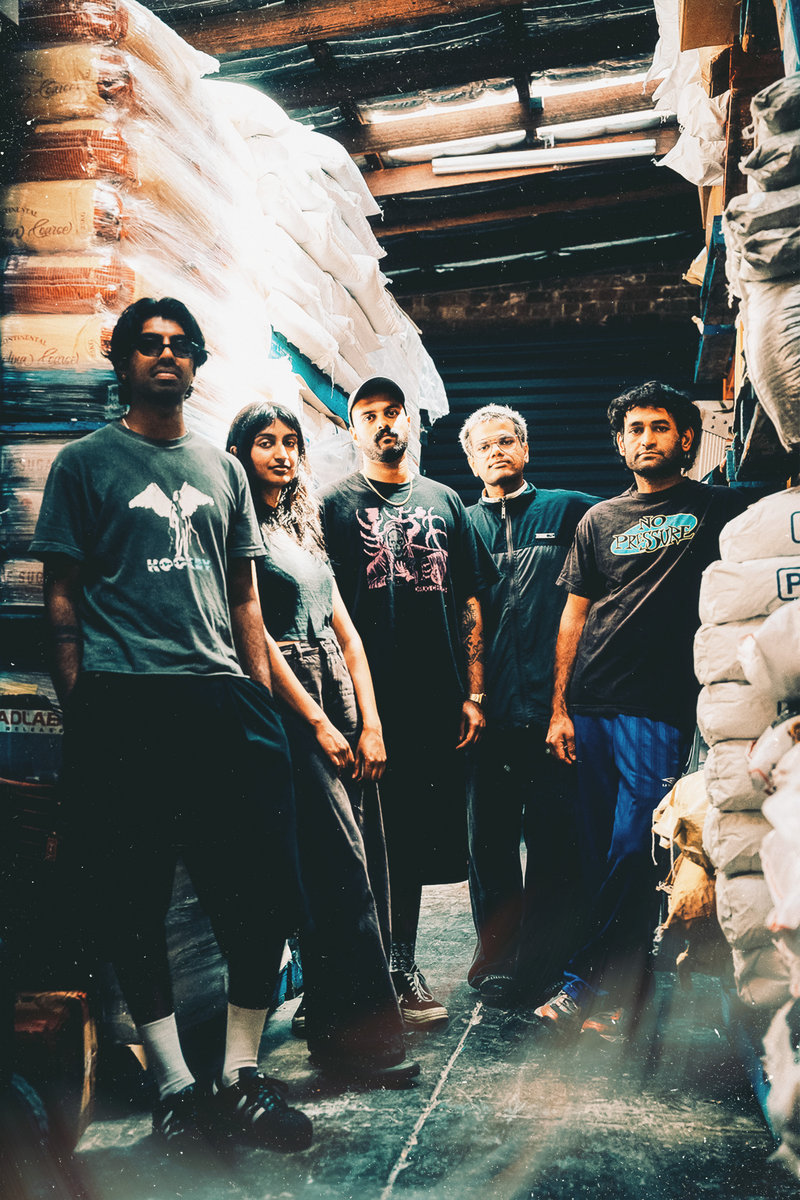
UNDENIABLE o novo EP da banda srilankêsa Illan Kaapan formada por Asela Marcelline no vocal, George De Silva e Githmi Wettasinghe nas guitarras, Ko Regunathan no baixo e Prince Jayasundera na bateria me atingiu pela forma como esses caras transformam identidade em linguagem. Não sou um exímio conhecedor da cena underground do Sri-Lanka, essa que inclusive é a primeira banda de hardcore do país que escuto, eu acho que comecei bem… peço que leia essa resenha ao som desse EP.
Lançado em 31 de agosto de 2026 sob o catálogo LLR133, em uma edição conjunta da Life.Lair.Regret Records e da Reason and Rage Records, UNDENIABLE chega quando a Illan Kaapan ainda pode ser considerada uma banda jovem. Mesmo assim, a distância entre o primeiro demo e estas seis faixas revela um grupo que rapidamente consolidou não apenas uma identidade, mas também uma ideia bastante clara sobre aquilo que seu hardcore deve provocar. E “provocar”, aqui, também precisa ser entendido fisicamente. UNDENIABLE é música feita para o espaço compartilhado de um show, riffs que induzem movimento, pausas construídas para breakdowns, refrões que pedem vozes coletivas e momentos que parecem existir justamente para diminuir a distância entre banda e público. Existe uma simplicidade deliberada nessa arquitetura. A Illan Kaapan não complica aquilo que funciona; prefere utilizar a repetição, o groove e o impacto do hardcore como linguagem corporal. O resultado é um disco que tanto quer ser ouvido quanto vivido no meio da multidão.

Essa dimensão física também ajuda a destacar aquilo que escapa ao padrão. O EP foi gravado por Sam “Sambucha” Taylor O’Neill no Sundowner Studios e mixado e masterizado por Sam Bianco, com toda a música composta pela própria Illan Kaapan. As letras são de Asela Marcelline, enquanto “Hand In Hand” traz letras e vocais de Githmi Wettasinghe e Robyn Challands. A percussão adicional de Surana “Lucky” Pereira assume importância especial porque amplia o vocabulário rítmico do disco e ajuda a aproximar uma estrutura tipicamente hardcore das referências culturais sri-lankesas que atravessam o projeto. Essa preocupação não termina na música. Cultural Death, obra de Thilini de Simon escolhida para a capa, estabelece visualmente questões de língua, identidade e apagamento cultural que reaparecem ao longo das seis faixas. O próprio Asela Marcelline assina o layout e o design, reforçando a impressão de que UNDENIABLE foi pensado como uma obra coerente; som, palavras e imagem pertencem à mesma discussão.
A banda não tenta reinventar a estrutura do hardcore. Os riffs são pesados, diretos, compassados e construídos sobre uma lógica familiar ao gênero, breakdowns, vocais agressivos, repetição, impacto físico e músicas curtas que parecem pedir movimento. Há algo quase funcional nesse peso, como se cada faixa tivesse sido construída para existir tanto nos fones quanto no meio de uma roda. Mas reduzir a Illan Kaapan a isso seria ignorar justamente aquilo que tornou o disco tão diferente de quase tudo que já ouvi.

O que me chamou atenção em UNDENIABLE não foi a tentativa de criar uma nova gramática para o hardcore, mas a maneira como a banda ocupa essa gramática com uma identidade própria. Entre Sri Lanka e Melbourne, entre +94 e +61 (DDI do Sri Lanka e DDI da Austrália), a Illan Kaapan transforma deslocamento, pertencimento, raça, memória, raiva e preservação cultural em matéria-prima musical. O hardcore funciona aqui como um território adotado, mas nunca como substituto daquilo que veio antes. É justamente dentro do mesmo que a banda reafirma suas raízes. Essa tensão entre dois lugares percorre o disco inteiro.

Em “The Rising Tide”, sinto primeiro a ideia de resistência. A música trabalha constantemente com imagens de confronto, pressão e renascimento. Viver com as costas contra a parede, atravessar a dor, continuar até o fim e nadar através da maré mesmo que isso custe tudo. Não escuto essa maré apenas como uma ameaça. Ela também me parece representar a força coletiva que envolve alguém quando encontra uma comunidade à qual realmente sente pertencer. Há algo importante nisso para compreender o disco, o pertencimento apresentado pela Illan Kaapan não é confortável ou passivo mas é construído no choque.
A inclusão de expressões em Sinhala (língua oficial do Sri Lanka) no meio da violência sonora reforça essa ideia. Quando a banda interrompe o inglês com “Huththo” (é uma gíria e um termo vulgar do idioma cingalês, falado no Sri Lanka, que costuma aparecer em conversas informais ou de forte emoção), não ouço apenas um palavrão ou uma provocação típica do hardcore. Ouço uma língua atravessando outra. Uma identidade que se recusa a desaparecer dentro do idioma dominante. Isso prepara perfeitamente o terreno para “Keeps Me Alive”, que considero uma das faixas essenciais do EP. “Left my heart in the south and my soul up north” é uma imagem simples, mas extremamente poderosa para representar a experiência do deslocamento. Existe uma vida construída em um lugar e uma identidade que continua emocionalmente conectada a outro. A partir daí, a música deixa de tratar imigração simplesmente como movimento geográfico. Imigrar também significa reconstruir a própria identidade. Existe sempre uma tensão entre integração e assimilação que é aprender a viver em outro país sem permitir que esse processo exija o abandono daquilo que você era antes de chegar.

É por isso que “Born to die brown” me parece uma das frases mais fortes de todo UNDENIABLE. Não a interpreto como resignação. Pelo contrário. É quase a afirmação de que a aceitação social deixa de ter valor quando o preço exigido é o apagamento da própria identidade. Ser “brown”, nesse contexto, não aparece como algo que precisa ser superado. É algo que permanece até o fim. Essa postura também impede que os elementos sri-lankeses presentes na Illan Kaapan pareçam acessórios. A presença de percussões associadas à tradição musical do Sri Lanka, expressões em Sinhala e referências culturais não funciona como exotismo colocado sobre uma base de hardcore. Esses elementos fazem sentido porque surgem de pessoas que estão tentando compreender o que significa continuar pertencendo a uma cultura depois de atravessar fronteiras. Em “Where U Stand (Built 2 Withstand)”, o foco se desloca do pertencimento para o posicionamento. É provavelmente a faixa mais explicitamente política do disco. Ela confronta a neutralidade, a apatia e a facilidade com que alguém pode observar sofrimento à distância e fingir que aquilo não exige qualquer resposta. Há uma crítica direta a quem permanece “em cima do muro”, absorvendo discursos fáceis enquanto transfere responsabilidades para todos ao redor.

O jogo entre “where you stand” e “built to withstand” é particularmente eficiente. De um lado, a pergunta política “onde você se posiciona?” do outro, uma declaração “eu fui construído para resistir.” Mas a música vai além. No final, não basta apenas “stand”. Não basta existir numa posição confortável e declarar valores abstratos. Há uma cobrança por ação. E talvez essa cobrança ganhe ainda mais força quando vem de uma banda formada em torno da experiência migratória. Para quem vive como minoria cultural ou racial em outro país, a política dificilmente permanece apenas no campo das ideias. Ela aparece no pertencimento, na linguagem, na aparência, no modo como uma pessoa é percebida e no espaço que lhe é permitido ocupar.
Depois dessa confrontação externa, “Made of Stone” me parece voltar para dentro. É uma música marcada por culpa, desgaste e transformação. A pergunta sobre o que aconteceu com “the boy in the sun” sugere a perda de alguma inocência anterior. O céu fica cinza, as asas são cortadas e aquilo que sobra precisa aprender a sobreviver, o título pode sugerir simplesmente força, mas não acho que a música seja tão simples pois tornar-se pedra também significa endurecer tem muita resistência nesse processo, mas existe custo tambem. A letra fala de culpa engolida, amor recebido, distância e da descoberta de si longe de casa. E é justamente aí que surge uma das ideias mais bonitas do disco, o significado de “casa” começa a mudar. Primeiro existe a necessidade de encontrar força longe dela. Depois, de encontrar a si mesmo longe dela e aí finalmente surge a percepção de que aquele novo lugar também pode se tornar casa. Essa transformação resume muito bem aquilo que enxergo em UNDENIABLE, a imigração não aparece como uma história simples de abandonar um lugar e encontrar outro, mas as duas identidades permanecem coexistindo.
Em “Hand In Hand”, o disco encontra outra dimensão dessa discussão, aqui a questão do deslocamento se cruza com gênero e expectativa social… uma mulher atravessa o mar em direção à promessa de uma vida melhor e começa a questionar quais possibilidades realmente lhe foram oferecidas. A pergunta sobre ser reduzida às posições de “mãe e esposa” não funciona, para mim, como rejeição dessas experiências, mas como rejeição da ideia de que elas devam constituir os únicos destinos possíveis … vc ta ligado?… é uma música sobre liberdade, mas principalmente sobre quem estabelece os limites dessa liberdade! Fuck u Donald Trump!!
Dentro de um disco tão preocupado com pertencimento, isso é importante! Uma comunidade pode proteger, preservar e oferecer identidade, mas também pode carregar expectativas sobre como seus integrantes devem viver. E uma das contradições mais interessantes de qualquer identidade cultural está justamente aí, como preservar aquilo que nos formou sem transformar tradição em prisão?
A presença de Githmi Wettasinghe e Robyn Challands nas letras e nos vocais torna essa mudança de perspectiva ainda mais significativa. A voz feminina não aparece como personagem narrada externamente ela participa diretamente da construção da música. Quando a letra declara que existe algo além do papel que lhe foi concedido, o tema do disco se expande novamente aqui pertencer também pode significar lutar por espaço dentro da própria comunidade e assim finalmente chegamos a “Anger Is a Place on Earth” que para mim, é a conclusão necessária para um disco construído sobre tanta resistência.

Hardcore sempre encontrou na raiva uma linguagem extremamente eficiente. A própria Illan Kaapan utiliza essa energia o tempo inteiro. Mas a última faixa faz algo que considero mais interessante do que simplesmente celebrar essa raiva. Ela começa a questioná-la. A ideia central é devastadora pois a raiva deixa de ser apenas uma emoção e se torna um lugar onde alguém mora. Isso é profundo pois quanto mais o narrador tenta sair, mais profundamente parece cavar e assim me surgiu a incógnita que define a faixa… “onde termina essa raiva e começa a pessoa?” essa pergunta transforma completamente a agressividade apresentada anteriormente no disco. Sabe como analiso isso?! então…a raiva pode proteger, pode mobilizar, pode produzir resistência, pode transformar dor em ação… assim foi com Aquiles (A Ilíada, de Homero), tal qual com a criatura (Frankenstein, de Mary Shelley), bem como Heathcliff (O Morro dos Ventos Uivantes, de Emily Brontë) e porque não Medeia (Medeia, de Eurípedes)… a raiva pode consumir a pessoa que depende dela por tempo demais e é por isso que a pequena mudança no final “I let the good in” é genial e tem tanto peso. Não existe abandono da raiva. Existe apenas a decisão de permitir que outra coisa também tenha espaço.

Depois de um disco inteiro sobre permanecer, resistir, atravessar e suportar, essa talvez seja sua forma mais difícil de resistência. Musicalmente, UNDENIABLE continua sendo um disco de hardcore e acho importante dizer isso sem tentar transformá-lo artificialmente em algo que não é. A técnica segue deliberadamente uma linguagem reconhecível. A bateria empurra, os riffs priorizam impacto e groove, os breakdowns cumprem exatamente sua função física e os vocais carregam a urgência esperada de um registro desse tipo. O diferencial está em outra camada … poucas vezes ouvi um disco em que elementos culturais aparentemente tão distantes da tradição do hardcore fossem incorporados sem parecer enxerto. A identidade sri-lankesa da Illan Kaapan não está sobre a música, está dentro dela.
Isso também torna a escolha de “Cultural Death”, de Thilini de Simon, como arte de capa particularmente coerente. A própria imagem coloca em discussão preservação cultural, linguagem e apagamento. Quando associada a um disco majoritariamente cantado em inglês, mas constantemente atravessado por símbolos, experiências e palavras de outra cultura, a capa passa a dialogar diretamente com a música. É quase como se UNDENIABLE estivesse o tempo inteiro enfrentando o questionamento do quanto de nós mesmos precisamos perder para pertencer a um novo lugar?
E a resposta da Illan Kaapan parece ser… nada.
Talvez seja justamente essa a força do título, o “inegável” não é apenas a energia da banda.
É aquilo que permanece depois da migração… a sua origem, sua memória, a sua língua, sua cor, a sua família, a sua raiva, o seu novo lar, a necessidade de pertencer e a recusa em aceitar que pertencimento precise significar assimilação.
Por isso, termino UNDENIABLE com a sensação de ter ouvido algo muito mais interessante do que simplesmente um bom EP de hardcore. Ouvi uma banda utilizando uma das formas mais diretas, físicas e agressivas da música pesada para discutir uma experiência muito mais complexa que é construir uma nova vida sem permitir que a anterior seja apagada. A Illan Kaapan não precisa reinventar o hardcore para soar diferente, ela faz algo talvez mais difícil, faz o hardcore falar com uma voz que eu ainda não tinha ouvido dessa maneira.
ENGLISH TRANSLATED
ENGLISH TRANSLATED HERE
UNDENIABLE, the new EP by Sri Lankan band Illan Kaapan, hit me because of the way these guys turn identity into language. I’m far from being an expert on Sri Lanka’s underground scene, and this is actually the first hardcore band from the country I’ve ever listened to, so I guess I started off well… I ask that you read this review while listening to the EP.
Released on August 31, 2026 under catalog number LLR133, as a joint release by Life.Lair.Regret Records and Reason and Rage Records, UNDENIABLE arrives at a point when Illan Kaapan can still be considered a young band. Even so, the leap from their first demo to these six tracks reveals a group that has quickly consolidated not only an identity, but also a very clear idea of what their hardcore is meant to provoke. And “provoke,” here, also needs to be understood physically. UNDENIABLE is music made for the shared space of a live show: riffs that make bodies move, pauses built for breakdowns, choruses that call for collective voices, and moments that seem designed precisely to reduce the distance between band and audience. There is a deliberate simplicity to this architecture. Illan Kaapan does not overcomplicate what already works; instead, they use repetition, groove, and the physical impact of hardcore as a kind of body language. The result is a record that wants to be heard just as much as it wants to be experienced in the middle of a crowd.
That physical dimension also helps highlight what falls outside the expected pattern. The EP was engineered by Sam “Sambucha” Taylor O’Neill at Sundowner Studios and mixed and mastered by Sam Bianco, with all music written by Illan Kaapan. The lyrics are by Asela Marcelline, while “Hand In Hand” features lyrics and vocals by Githmi Wettasinghe and Robyn Challands. Additional percussion by Surana “Lucky” Pereira takes on particular importance because it broadens the record’s rhythmic vocabulary and helps bring a typically hardcore framework closer to the Sri Lankan cultural references running through the project. That concern does not end with the music. Cultural Death, the work by Thilini de Simon chosen as the cover art, visually introduces questions of language, identity, and cultural erasure that resurface throughout the six tracks. Asela Marcelline himself handled the layout and design, reinforcing the impression that UNDENIABLE was conceived as a coherent work; sound, words, and imagery all belong to the same conversation.
The band is not trying to reinvent the structure of hardcore. The riffs are heavy, direct, measured, and built around a logic familiar to the genre: breakdowns, aggressive vocals, repetition, physical impact, and short songs that seem to demand movement. There is something almost functional about that heaviness, as if each track had been built to exist both through headphones and in the middle of a pit. But reducing Illan Kaapan to that would mean ignoring exactly what makes this record so different from almost everything I have heard before.
What caught my attention in UNDENIABLE was not an attempt to create a new grammar for hardcore, but the way the band inhabits that grammar with an identity of its own. Between Sri Lanka and Melbourne, between +94 and +61 (the international calling codes for Sri Lanka and Australia), Illan Kaapan turns displacement, belonging, race, memory, anger, and cultural preservation into musical raw material. Hardcore functions here as an adopted territory, but never as a replacement for what came before. It is precisely within that territory that the band reasserts its roots. This tension between two places runs through the entire record.
In “The Rising Tide,” the first thing I feel is the idea of resistance. The song constantly works with images of confrontation, pressure, and rebirth. Living with your back against the wall, pushing through pain, carrying on to the end, and swimming straight through the tide even if it costs you everything. I do not hear that tide only as a threat. It also seems to represent the collective force that surrounds someone when they find a community they truly feel they belong to. There is something important here for understanding the record: the kind of belonging Illan Kaapan presents is neither comfortable nor passive; it is forged through collision.
The inclusion of expressions in Sinhala (an official language of Sri Lanka) in the middle of all that sonic violence reinforces the idea. When the band interrupts the English with “Huththo” (a slang term and vulgar expression in Sinhala, spoken in Sri Lanka, commonly used in informal conversation or moments of strong emotion), I do not hear just a swear word or a typical hardcore provocation. I hear one language cutting through another. An identity refusing to disappear inside the dominant language. That sets the stage perfectly for “Keeps Me Alive,” which I consider one of the essential tracks on the EP. “Left my heart in the south and my soul up north” is a simple image, but an extremely powerful one for representing the experience of displacement. There is a life built in one place and an identity that remains emotionally connected to another. From that point on, the song stops treating immigration as simply a geographical movement. To immigrate also means rebuilding your own identity. There is always a tension between integration and assimilation: learning how to live in another country without allowing that process to demand the abandonment of who you were before you arrived.
That is why “Born to die brown” strikes me as one of the strongest lines on all of UNDENIABLE. I do not read it as resignation. Quite the opposite. It is almost a declaration that social acceptance loses its value when the price being demanded is the erasure of your own identity. Being “brown,” in this context, is not presented as something that needs to be overcome. It is something that remains until the end. That stance also prevents the Sri Lankan elements in Illan Kaapan from feeling like accessories. The presence of percussion associated with Sri Lanka’s musical traditions, expressions in Sinhala, and cultural references does not come across as exoticism laid over a hardcore foundation. These elements make sense because they come from people trying to understand what it means to remain part of a culture after crossing borders. In “Where U Stand (Built 2 Withstand),” the focus shifts from belonging to taking a position. It is probably the most explicitly political track on the record. It confronts neutrality, apathy, and the ease with which someone can watch suffering from a distance and pretend it demands no response. There is a direct criticism of those who remain “on the fence,” absorbing easy rhetoric while shifting responsibility onto everyone around them.
The thammattama is a traditional double-bodied drum from Sri Lanka, used mainly in Buddhist rituals and cultural ceremonies, and the band makes use of this percussion instrument in its music!
The wordplay between “where you stand” and “built to withstand” is particularly effective. On one side, there is the political question: “where do you stand?” On the other, a declaration: “I was built to withstand.” But the song goes further. In the end, it is not enough simply to “stand.” It is not enough to occupy a comfortable position and declare abstract values. There is a demand for action. And perhaps that demand carries even more weight coming from a band formed around the immigrant experience. For those living as a cultural or racial minority in another country, politics rarely remains confined to the realm of ideas. It appears in belonging, in language, in appearance, in the way a person is perceived, and in the amount of space they are allowed to occupy.
After that outward confrontation, “Made of Stone” seems to turn inward. It is a song marked by guilt, weariness, and transformation. The question of what happened to “the boy in the sun” suggests the loss of some earlier innocence. The sky turns gray, the wings are clipped, and whatever remains has to learn how to survive. The title may suggest strength at first, but I do not think the song is that simple, because becoming stone also means becoming hardened. There is a great deal of resilience in that process, but there is a cost as well. The lyrics speak of swallowed guilt, love received, distance, and discovering yourself far from home. And it is precisely there that one of the most beautiful ideas on the record emerges: the meaning of “home” begins to change. First comes the need to find strength far from it. Then comes the need to find yourself far from it, until finally there is the realization that this new place can become home too. That transformation captures very well what I see in UNDENIABLE: immigration is not presented as a simple story of leaving one place behind and finding another, because both identities continue to coexist.
In “Hand In Hand,” the record finds another dimension to this discussion. Here, displacement intersects with gender and social expectations… a woman crosses the sea toward the promise of a better life and begins to question what possibilities were actually made available to her. The question of being reduced to the roles of “mother and wife” does not work for me as a rejection of those experiences, but rather as a rejection of the idea that they should be the only possible destinies… you know what I mean?… it is a song about freedom, but above all about who gets to set the limits of that freedom! Fuck u Donald Trump!!
Within a record so deeply concerned with belonging, this matters! A community can protect, preserve, and offer identity, but it can also carry expectations about how its members are supposed to live. And one of the most interesting contradictions within any cultural identity lies precisely there: how do we preserve what shaped us without turning tradition into a prison?
The presence of Githmi Wettasinghe and Robyn Challands in the lyrics and vocals makes that shift in perspective even more meaningful. The female voice does not appear as a character being narrated from the outside; it takes part directly in constructing the song. When the lyrics declare that there is something beyond the role she has been assigned, the theme of the record expands once again: belonging can also mean fighting for space within your own community. And so we finally arrive at “Anger Is a Place on Earth,” which, for me, is the necessary conclusion to a record built around so much resistance.
Hardcore has always found in anger an extremely effective language. Illan Kaapan uses that energy throughout the entire record. But the final track does something I find more interesting than simply celebrating that anger. It begins to question it. The central idea is devastating, because anger stops being merely an emotion and becomes a place where someone lives. That is profound, because the more the narrator tries to get out, the deeper he seems to dig himself in, and that is where the question that defines the track came to me… “where does that anger end and the person begin?” That question completely transforms the aggression presented earlier on the record. You know how I read this?! Well… anger can protect, it can mobilize, it can create resistance, it can turn pain into action… that was true of Achilles (The Iliad, by Homer), just as it was with the Creature (Frankenstein, by Mary Shelley), with Heathcliff (Wuthering Heights, by Emily Brontë), and why not Medea (Medea, by Euripides)… anger can consume the person who depends on it for too long, and that is why the small shift at the end — “I let the good in” — is brilliant and carries so much weight. The anger is not abandoned. There is only the decision to allow something else to take up space too.
After an entire record about staying, resisting, pushing through, and enduring, perhaps this is its most difficult form of resistance. Musically, UNDENIABLE is still a hardcore record, and I think it is important to say that without trying to artificially turn it into something it is not. The technique deliberately follows a recognizable language. The drums drive everything forward, the riffs prioritize impact and groove, the breakdowns fulfill exactly their physical purpose, and the vocals carry the urgency expected from a record like this. The difference lies on another level… very few times have I heard a record in which cultural elements that seem so distant from hardcore tradition were incorporated without feeling grafted onto it. Illan Kaapan’s Sri Lankan identity is not sitting on top of the music; it is inside it.
That also makes the choice of “Cultural Death,” by Thilini de Simon, as the cover art particularly coherent. The image itself raises questions of cultural preservation, language, and erasure. Paired with a record sung mostly in English but constantly crossed by symbols, experiences, and words from another culture, the cover begins to speak directly to the music. It is almost as if UNDENIABLE is constantly confronting the question of how much of ourselves we are expected to lose in order to belong somewhere new.
And Illan Kaapan’s answer seems to be… nothing.
Perhaps that is precisely where the strength of the title lies: the “undeniable” is not only the band’s energy.
It is what remains after migration… your origin, your memory, your language, your color, your family, your anger, your new home, the need to belong, and the refusal to accept that belonging must mean assimilation.
That is why I finish UNDENIABLE with the feeling that I have heard something far more interesting than simply a good hardcore EP. I heard a band using one of the most direct, physical, and aggressive forms of heavy music to discuss a much more complex experience: building a new life without allowing the old one to be erased. Illan Kaapan does not need to reinvent hardcore in order to sound different; they do something perhaps more difficult — they make hardcore speak in a voice I had never heard quite this way before.



Deixe uma resposta