


O começo que ninguém valoriza
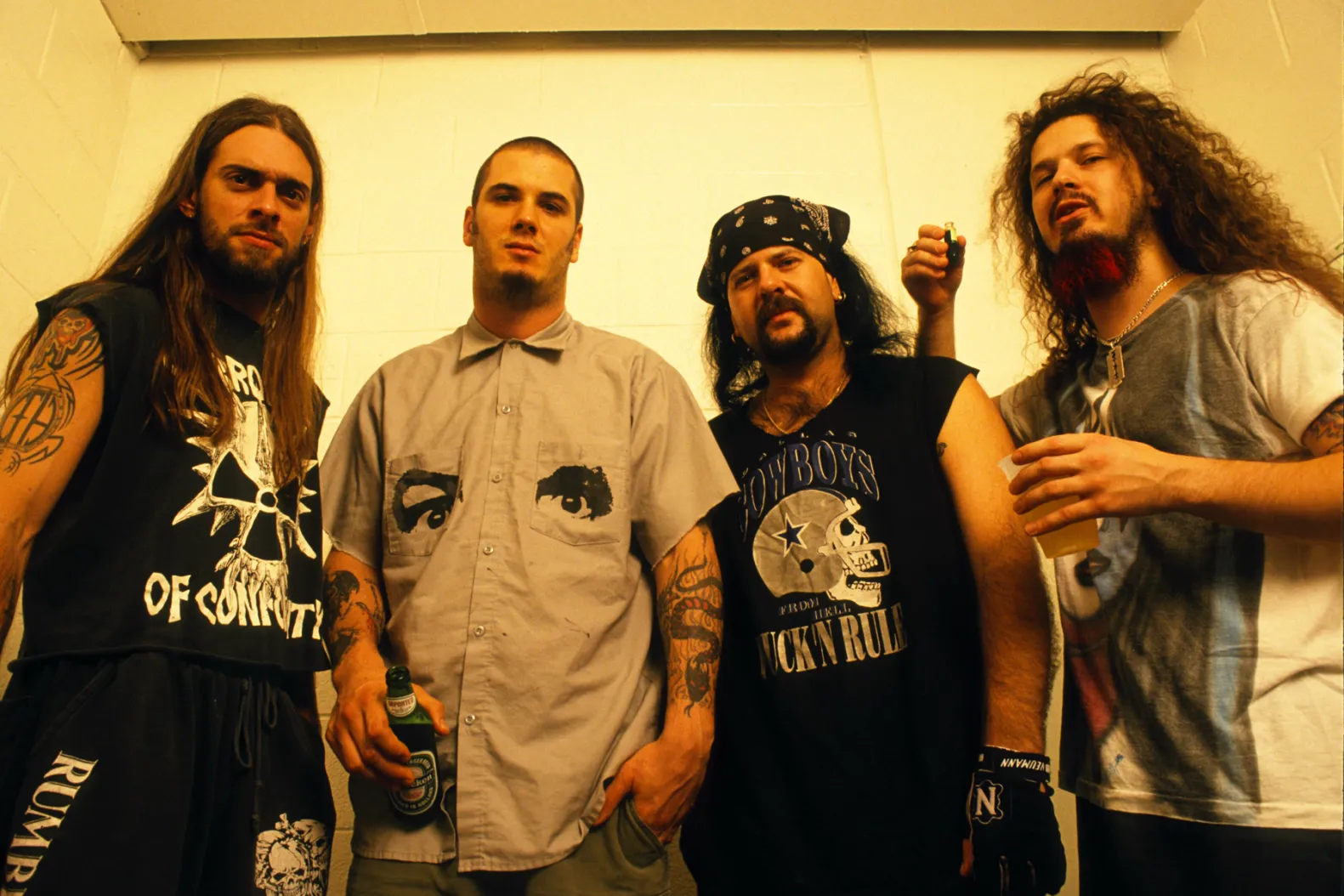
O Pantera nasceu em Arlington, Texas, no início dos anos 80, formado pelos irmãos Dimebag Darrell (guitarra) e Vinnie Paul (bateria), acompanhados pelo baixista Rex Brown. Só que, antes de virar sinônimo de groove metal, eles eram… glam. Sim, cabelos armados, roupas coladas e maquiagem. Álbuns como Metal Magic (1983) e Projects in the Jungle(1984) são ignorados pela maioria dos fãs, mas escondem a fase formativa da banda. Ali, Dimebag já mostrava sua habilidade absurda, mesmo em músicas que soavam datadas.

Pouca gente lembra que o vocalista original era Terry Glaze, que foi chutado por não ter o peso vocal que a banda buscava. Foi só com a entrada de Phil Anselmo, em 1987, que o Pantera achou a sua voz definitiva — agressiva, visceral, crua.
A mutação sonora: do glam ao groove metal
Com Power Metal (1988), o Pantera começou a experimentar algo mais pesado, mas foi em Cowboys from Hell (1990) que tudo mudou. Esse disco é o verdadeiro renascimento da banda: riffs cortantes, bateria esmagadora e a fúria de Anselmo deram início ao que conhecemos como groove metal.

O mais curioso? A banda sempre rejeitou ser chamada de thrash puro. Eles admiravam Slayer e Metallica, mas queriam algo diferente. A cadência, o groove e a agressividade eram a marca registrada de Dimebag e Vinnie, e isso criou um gênero à parte.

Os discos que moldaram uma geração
Cowboys from Hell (1990) → O grito de guerra. “Cemetery Gates” mostrou que Pantera sabia ser melódico sem perder brutalidade.
Vulgar Display of Power (1992) → Talvez o ápice. A capa icônica (um soco no rosto) reflete a sonoridade: direto, sem firula. Músicas como “Walk” e “F***ing Hostile” viraram hinos.
Far Beyond Driven (1994) → O disco mais pesado a estrear em primeiro lugar na Billboard. A brutalidade ali é quase sufocante, mas “Planet Caravan” (cover do Sabbath) mostrou uma face psicodélica.T
The Great Southern Trendkill (1996) → Um disco sombrio, com Phil mergulhado em problemas de drogas e letras carregadas de ódio e depressão. Detalhe pouco falado: muito das gravações de Anselmo foram feitas separadamente, pois a relação dele com os irmãos já estava em ruínas.
Reinventing the Steel (2000) → Um retorno às raízes, mas com a tensão interna já impossível de disfarçar.
A química (e o conflito) entre os membros
O Pantera funcionava porque era uma gangue musical.
- Dimebag Darrell: gênio dos riffs, influenciado tanto por Eddie Van Halen quanto por Tony Iommi.
- Vinnie Paul: técnico, mas brutal. Criava batidas que soavam como socos.
- Rex Brown: o alicerce silencioso, com um baixo que colava guitarra e bateria.
- Phil Anselmo: carisma explosivo, mas também uma bomba-relógio. Sua presença de palco era magnética, mas fora do palco era autodestrutivo.
Pouca gente sabe que, nos bastidores, a arrogância de Anselmo e o vício em heroína abriram um abismo entre ele e os irmãos Abbott. Chegou ao ponto de Phil gravar vocais sozinho, sem nenhum contato com os outros.
Ruptura e tragédia
O fim do Pantera foi tão brutal quanto sua música. Em 2003, Anselmo focava no Down e no Superjoint Ritual, e os Abbott consideravam isso uma traição. A banda simplesmente implodiu.

E então veio a tragédia: em 2004, Dimebag Darrell foi assassinado em pleno palco, durante um show com o Damageplan, banda que ele formou com Vinnie após o Pantera. Um fã perturbado invadiu o palco e atirou. O mundo do metal nunca se recuperou desse trauma. Vinnie Paul, por sua vez, nunca perdoou Anselmo, acusando-o de ter alimentado o ódio contra Dime com suas declarações inflamadas.
Legado e reinterpretações
O Pantera foi mais que uma banda — foi a ponte entre o thrash dos anos 80 e o metal moderno. Influenciou Lamb of God, Machine Head, Slipknot e até bandas de deathcore.
Detalhe que poucos sabem: Dimebag recusou convite do Megadeth e do Anthrax para integrar suas formações. Ele acreditava cegamente no Pantera.
Hoje, com a “reunião” de Phil Anselmo e Rex Brown, acompanhados por Zakk Wylde (guitarra) e Charlie Benante(bateria), a memória de Pantera segue viva. Mas a discussão permanece: é homenagem legítima ou exploração da marca? Fato é que, no palco, a energia ainda arrepia.
O balanço final
O Pantera foi glória e desgraça, irmandade e traição, genialidade e caos. Deixou apenas cinco álbuns que importam de verdade (Cowboys até Reinventing), mas cada um deles é um marco. O que ninguém pode negar: o som dos Abbott e a fúria de Anselmo transformaram o metal dos anos 90.
E, mesmo entre polêmicas, o Pantera segue sendo aquela banda que, quando toca, faz o mundo querer quebrar tudo em volta.
Texto: Gmaglia
The Beginning Nobody Values
Pantera was born in Arlington, Texas, in the early 1980s, formed by brothers Dimebag Darrell (guitar) and Vinnie Paul (drums), along with bassist Rex Brown. But before becoming synonymous with groove metal, they were… glam. Yes — teased hair, spandex, and makeup. Albums like Metal Magic (1983) and Projects in the Jungle (1984) are ignored by most fans, but they hide the band’s formative years. Even then, Dimebag was already showing his absurd skill, even in songs that sounded dated.
Few remember that the original vocalist was Terry Glaze, who was kicked out for not having the vocal weight the band wanted. It was only with the arrival of Phil Anselmo in 1987 that Pantera found its definitive voice — aggressive, visceral, raw.
The Sonic Mutation: From Glam to Groove Metal
With Power Metal (1988), Pantera started experimenting with a heavier sound, but it was Cowboys from Hell (1990) that changed everything. This album was the band’s true rebirth: cutting riffs, crushing drums, and Anselmo’s fury gave birth to what we now call groove metal.
The curious part? The band always rejected being labeled as pure thrash. They admired Slayer and Metallica, but wanted something different. The cadence, the groove, and the aggression were the trademarks of Dimebag and Vinnie, creating a genre of their own.
The Albums That Shaped a Generation
- Cowboys from Hell (1990) → The war cry. “Cemetery Gates” proved Pantera could be melodic without losing brutality.
- Vulgar Display of Power (1992) → Perhaps their peak. The iconic cover (a punch to the face) reflects the sound: direct, no frills. Songs like “Walk” and “F***ing Hostile” became anthems.
- Far Beyond Driven (1994) → The heaviest album ever to debut at #1 on Billboard. Suffocating brutality, but with a psychedelic touch in their Planet Caravan (Sabbath) cover.
- The Great Southern Trendkill (1996) → Dark, with Phil drowning in drug problems and lyrics filled with hate and depression. A little-known fact: much of Anselmo’s vocals were recorded separately, as his relationship with the Abbott brothers was already collapsing.
- Reinventing the Steel (2000) → A return to their roots, but with internal tension impossible to hide.
The Chemistry (and Conflict) Between Members
Pantera worked because they were a musical gang.
- Dimebag Darrell: a riff genius, influenced as much by Eddie Van Halen as by Tony Iommi.
- Vinnie Paul: technical, but brutal — his drumming hit like a fist.
- Rex Brown: the silent backbone, gluing guitar and drums together.
- Phil Anselmo: explosive charisma, but a ticking time bomb. Magnetic on stage, self-destructive off stage.
Behind the scenes, Anselmo’s arrogance and heroin addiction created a rift with the Abbott brothers. It got to the point where Phil was recording vocals alone, with no contact with the rest of the band.
Rupture and Tragedy
Pantera’s end was as brutal as their music. By 2003, Anselmo was focused on Down and Superjoint Ritual, which the Abbott brothers saw as betrayal. The band simply imploded.
And then came tragedy: in 2004, Dimebag Darrell was murdered on stage during a Damageplan show, the band he and Vinnie formed after Pantera. A disturbed fan stormed the stage and shot him. The metal world never recovered from that trauma. Vinnie Paul never forgave Anselmo, accusing him of fueling hatred toward Dime with his inflammatory remarks.
Legacy and Reinterpretations
Pantera was more than a band — they were the bridge between ’80s thrash and modern metal. They influenced Lamb of God, Machine Head, Slipknot, and even deathcore bands.
Little-known fact: Dimebag turned down invitations to join Megadeth and Anthrax. He believed blindly in Pantera.
Today, with the “reunion” of Phil Anselmo and Rex Brown, joined by Zakk Wylde (guitar) and Charlie Benante (drums), Pantera’s memory lives on. But the debate remains: is it a legitimate tribute or brand exploitation? What’s undeniable: on stage, the energy still gives chills.
The Final Balance
Pantera was glory and disgrace, brotherhood and betrayal, genius and chaos. They left only five albums that truly matter (Cowboys through Reinventing), but each one is a milestone. What can’t be denied: the sound of the Abbott brothers and Anselmo’s fury transformed ’90s metal.
And even through all the controversies, Pantera remains that band that, when played loud, makes the world want to smash everything around.



Deixe uma resposta