


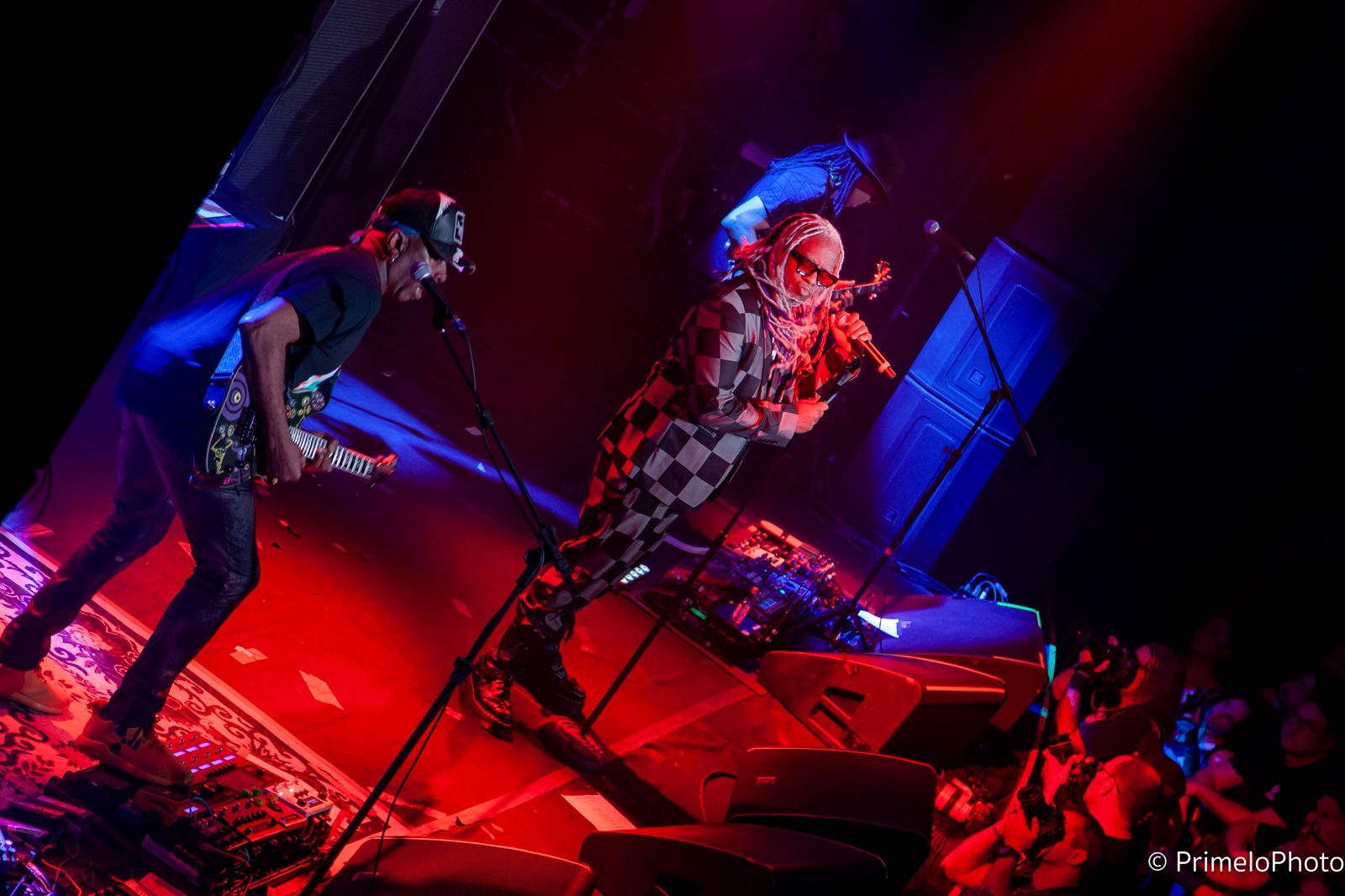

Algumas noites começam quando as luzes se apagam.
Outras começam antes, no ar. Na fila que se forma sem pressa, no encontro entre rostos que compartilham uma mesma expectativa silenciosa. No dia 26 de fevereiro de 2026, o Opinião respirava diferente. Ainda não completamente lotado, mas já tomado por aquela sensação que só existe quando algo maior está prestes a acontecer.
Madzilla: quando Las Vegas falou português em Porto Alegre
Direto de Las Vegas, o Madzilla subiu ao palco carregando consigo o tipo de energia que nasce em lugares extremos. Não havia pressa. Não havia excesso. Apenas intenção.

“The Dawn of Glory” começou sozinho, com o piano preenchendo o espaço com uma beleza quase frágil. Era um convite. Ou talvez um aviso. Porque quando o restante da banda entrou, a fragilidade se transformou em impacto.
“Ashes of Lights” rompeu o silêncio com precisão. O som estava cristalino, poderoso, cada instrumento ocupando seu próprio território. O Madzilla não tocava como uma banda em início de noite. Tocava como quem tinha algo a provar — e sabia exatamente como fazer isso.
Foi então que o inesperado aconteceu.

David, o vocalista, se aproximou do microfone e começou a falar em português. Não como um gesto protocolar, mas com intimidade. Convidou todos a beber uma cerveja com ele. Chamou o público de sua “família brasileira”. O Opinião respondeu imediatamente. O rugido coletivo não era apenas entusiasmo. Era reconhecimento.
Naquele instante, a distância entre Las Vegas e Porto Alegre deixou de existir.
“Vengeance” e “Warfare Within” consolidaram o território. O peso era moderno, afiado, sem desperdício. Cada riff encontrava o corpo do público, cada virada da bateria empurrava a noite adiante.
Então veio “Angel Genocide”.

Recém-lançada em formato de videoclipe naquela mesma semana, a música carregava o frescor do presente. Não havia nostalgia ali. Apenas nascimento. O público ainda descobria a música, mas já respondia ao seu impacto. Era o som de uma banda em movimento.
“Asphyxiating Cries” aprofundou a atmosfera, antes de “A Deadly Threat” encerrar o set com autoridade. Sem exageros. Sem despedidas longas. Apenas o silêncio depois do impacto.
O Madzilla não apenas abriu a noite.
Preparou o terreno.
E então veio a consciência.
Living Colour : o som que ainda respira
Quando “The Imperial March” ecoou pelo sistema de som, o Opinião já estava completamente tomado. Agora não havia mais espaços vazios. Apenas corpos, expectativa e história prestes a se manifestar.

O Living Colour entrou no palco sem pressa, como quem entende exatamente o peso do próprio legado.
Vernon Reid fez a guitarra falar antes mesmo de qualquer palavra existir. Corey Glover surgiu com aquela presença que não precisa ser explicada. Doug Wimbish e Will Calhoun assumiram seus lugares com a naturalidade de quem construiu aquilo tudo nota por nota ao longo de décadas.

“Leave It Alone” abriu o caminho, e o som que saiu das caixas era vivo. Não limpo demais. Não polido demais. Apenas real.
O Living Colour nunca foi uma banda que depende do passado. Eles existem no presente.
“Memories Can’t Wait”, dos Talking Heads, trouxe uma atmosfera mais introspectiva, quase urbana em sua essência. Era a prova de que a banda sempre transitou entre mundos diferentes sem jamais perder identidade.
Mas foi em “Funny Vibe”, fundida com “Fight the Power”, que a arquitetura completa da banda se revelou. Ali estava o DNA do rap, do funk, do metal e da consciência política coexistindo sem esforço. Não como fusão calculada, mas como linguagem natural.
Doug Wimbish conduzia tudo com aquele groove que não pode ser ensinado. Will Calhoun mantinha o equilíbrio com precisão absoluta. Vernon Reid expandia as possibilidades da guitarra. Corey Glover não apenas cantava — comunicava.

“Hallelujah”, de Leonard Cohen, trouxe um momento de suspensão. O peso deu lugar ao silêncio interno. Era o respiro necessário antes da próxima onda.
“Glamour Boys”. “Love Rears Its Ugly Head”. “Type”.
Cada música parecia existir além do tempo.
E então veio “Cult of Personality”.
Não como nostalgia. Como confirmação.
O Opinião respondeu instantaneamente, cada voz se somando àquela estrutura que continua tão relevante hoje quanto no dia em que foi criada.
O encore trouxe “Solace of You”, carregada de emoção contida, antes do encerramento com “Should I Stay or Should I Go”, do The Clash.
Mas a pergunta nunca esteve em aberto.
Porque naquela noite, duas forças diferentes se encontraram no mesmo palco.
De um lado, o Madzilla, atravessando o deserto e encontrando uma nova casa.
Do outro, o Living Colour, lembrando a todos que consciência também pode ser pesada.
Quando as luzes se acenderam, ninguém saiu imediatamente.
Algumas noites terminam quando o som acaba.
Outras continuam existindo dentro de quem esteve lá.


In English
Some nights begin when the lights go out.
Others begin earlier, in the air. In the line forming without urgency, in the silent recognition between faces sharing the same expectation. On February 26, 2026, Opinião was breathing differently. Not completely full yet, but already occupied by that rare feeling that something larger was about to unfold.
The desert arrived first.
Straight out of Las Vegas, Madzilla stepped onto the stage carrying the kind of energy that is born in extreme places. There was no rush. No excess. Only intention.
“The Dawn of Glory” began alone, the piano filling the space with an almost fragile beauty. It felt like an invitation. Or perhaps a warning. Because when the rest of the band entered, fragility turned into impact.
“Ashes of Lights” broke the silence with precision. The sound was crystal clear, powerful, each instrument occupying its own territory. Madzilla did not play like a band opening the night. They played like a band with something to prove — and fully aware of how to do it.
Then the unexpected happened.
David, the vocalist, stepped toward the microphone and began speaking in Portuguese. Not as a rehearsed gesture, but with sincerity. He invited everyone to have a beer with him. He called the audience his “Brazilian family.” The response was immediate. The collective roar was not just enthusiasm. It was recognition.
In that moment, the distance between Las Vegas and Porto Alegre ceased to exist.
“Vengeance” and “Warfare Within” reinforced their presence. The weight was modern, sharp, without waste. Each riff connected physically with the audience, each drum strike pushing the night forward.
Then came “Angel Genocide.”
Freshly released as a music video that same week, the song carried the urgency of the present. There was no nostalgia there. Only birth. The audience was still discovering the song, but already responding to its impact. It was the sound of a band in motion.
“Asphyxiating Cries” deepened the atmosphere before “A Deadly Threat” closed the set with authority. No excess. No drawn-out farewell. Just the silence that follows impact.
Madzilla did not simply open the night.
They prepared the ground.
And then came consciousness.
When “The Imperial March” echoed through the sound system, Opinião was now completely full. No empty spaces remained. Only bodies, anticipation, and history preparing to manifest.
Living Colour stepped onto the stage without urgency, fully aware of the weight of their own legacy.
Vernon Reid made the guitar speak before any words existed. Corey Glover appeared with that presence that needs no explanation. Doug Wimbish and Will Calhoun took their places with the natural confidence of those who built this foundation note by note over decades.
“Leave It Alone” opened the path, and the sound coming from the speakers was alive. Not overly clean. Not overly polished. Just real.
Living Colour has never been a band dependent on the past. They exist in the present.
“Memories Can’t Wait,” originally by Talking Heads, brought a darker, more introspective atmosphere. Proof that the band has always moved between different worlds without ever losing its identity.
But it was during “Funny Vibe,” fused with “Fight the Power,” that the full architecture of the band revealed itself. The DNA of rap, funk, metal, and political consciousness coexisted naturally. Not as a calculated fusion, but as a native language.
Doug Wimbish guided everything with a groove that cannot be taught. Will Calhoun maintained absolute precision and balance. Vernon Reid expanded the possibilities of the guitar. Corey Glover did not simply sing — he communicated.
“Hallelujah,” by Leonard Cohen, brought a moment of suspension. The weight gave way to internal silence. The necessary breath before the next wave.
“Glamour Boys.” “Love Rears Its Ugly Head.” “Type.”
Each song existed beyond time.
Then came “Cult of Personality.”
Not as nostalgia. As confirmation.
Opinião responded instantly, every voice joining something that still carries meaning decades later.
The encore brought “Solace of You,” filled with restrained emotion, before closing with “Should I Stay or Should I Go,” by The Clash.
But the question was never truly open.
Because that night, two forces met on the same stage.
On one side, Madzilla, crossing the desert and finding a new home.
On the other, Living Colour, reminding everyone that consciousness can also be heavy.
When the lights came back on, no one left immediately.
Some nights end when the sound stops.
Others continue existing inside those who were there.




Deixe uma resposta